std::optional<T>::end
Von cppreference.com
| constexpr iterator end() noexcept; |
(seit C++26) | |
| constexpr const_iterator end() const noexcept; |
(seit C++26) | |
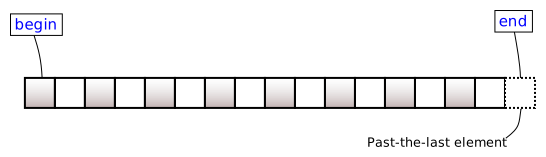
Gibt einen Iterator zurück, der hinter das Ende zeigt. Entspricht return begin() + has_value();.
Inhalt |
[bearbeiten] Parameter
(keine)
[bearbeiten] Rückgabewert
Iterator hinter dem Ende
[bearbeiten] Komplexität
Konstant.
[bearbeiten] Hinweise
| Feature-Test-Makro | Wert | Std | Feature |
|---|---|---|---|
__cpp_lib_optional_range_support |
202406L |
(C++26) | Bereichsunterstützung für std::optional |
[bearbeiten] Beispiel
Führen Sie diesen Code aus
#include <optional>
#include <print>

int main()
{
    constexpr std::optional<int> none = std::nullopt; // optional @1
    constexpr std::optional<int> some = 42;           // optional @2

    static_assert(none.begin() == none.end());
    static_assert(some.begin() != some.end());

    // ranged-for loop support
    for (int i : none)
        std::println("Optional @1 has a value of {}", i);

    for (int i : some)
        std::println("Optional @2 has a value of {}", i);
}
Ausgabe
Optional @2 has a value of 42
[bearbeiten] Siehe auch
| (C++26) |
gibt einen Iterator zum Anfang zurück (member function) |


